- Shoppers compare actives by strength. Printing the dose, and why you chose it, turns a claim into a reason to believe.
- One product template serves many products, so formula content must follow the product, or every page shows the same doses.
- In the US, what you claim can make a cosmetic count as a drug. In the EU, ingredient claims need evidence that the ingredient is present at an effective level.
"With niacinamide" tells a shopper almost nothing. "5% niacinamide, because above that irritation rises faster than results" tells them three things: what is in it, how much, and that someone thought about it. The second sentence sells, because it can be checked.
Why doses persuade
Skincare shoppers have become ingredient literate. They compare a 10% vitamin C with a 15% one, and they know retinal from retinol. A product page that names the active and hides the dose looks like it has something to hide. One that prints the dose, and says in a line why that number, looks like it was made by people who measure things.
How to present a formula
- Lead with the actives, not the full list. Three or four ingredients that do the work, each with its dose.
- Say what each one does, in plain words. "Supports the barrier and softens the look of pores."
- Say why this dose. This is the sentence competitors skip, and the one that earns trust.
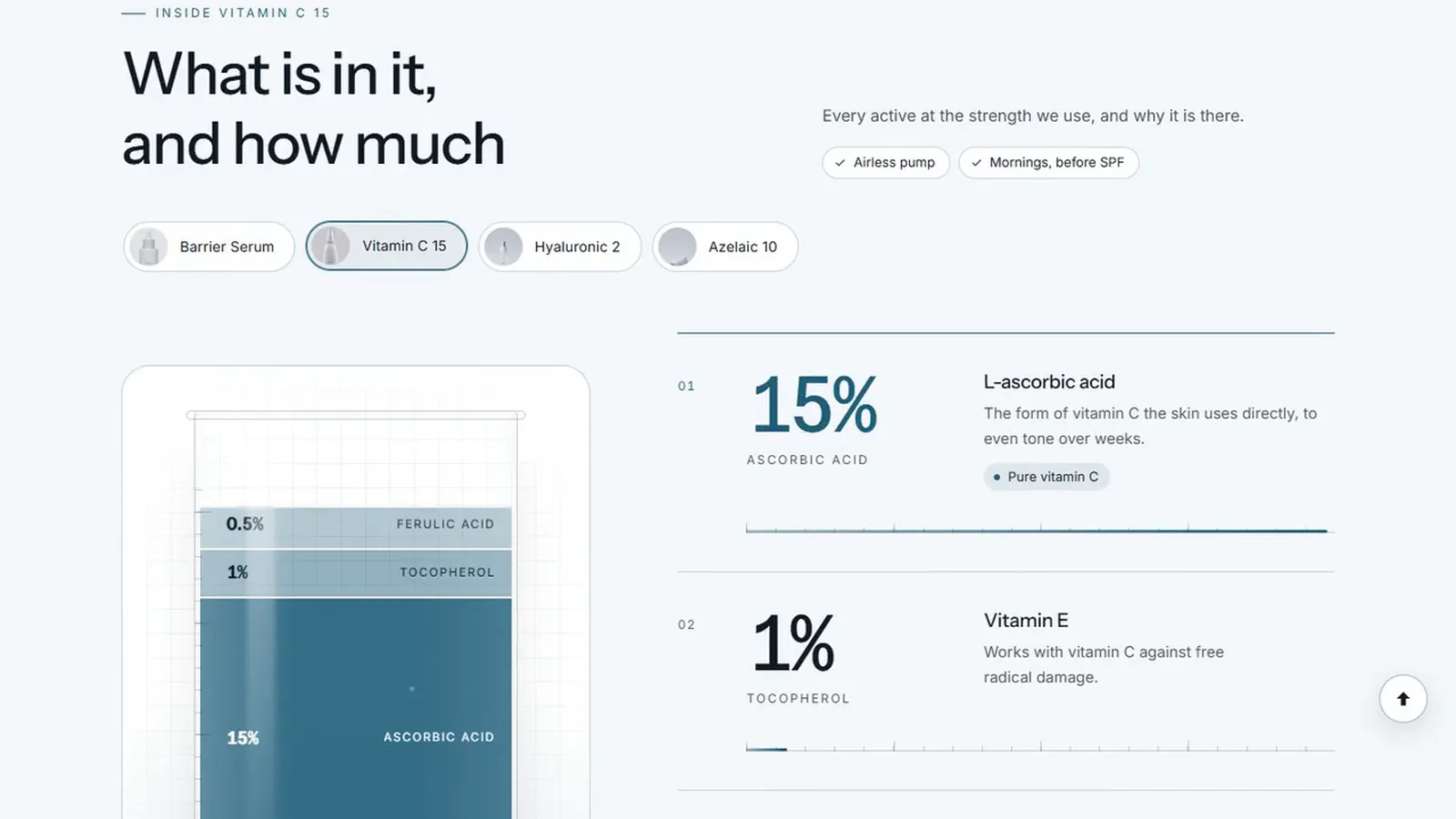
- Show the proportions. A picture of the amounts against each other is understood in a second.
- Keep the full INCI list one click away. People with allergies need it; most shoppers do not want to read it.
The template problem, and the fix
On Shopify, many products share one product template. A formula section that simply lists "5% niacinamide" will show it on every product using that template, including the cleanser that contains none. That is not just untidy; it is a false claim on a live page.
There are two clean ways out. The first is a template per product, which works for a small range and becomes a chore beyond it. The second is a section that holds every product's formula and shows only the one that belongs to the page. That is how we built the Formula dosage section in Acanthus: each product's actives sit under its own Formula block, product pages show only their own, and a product without a formula shows nothing at all. On the home page, the same section lets shoppers switch between formulas. The help guide shows the setup.
If your doses already live in product metafields, connect the section's settings to them, so the numbers are typed once, in the product.
Claims: the lines not to cross
This is not legal advice, but every beauty brand should know where the lines are.
- United States. The FDA decides whether a product is a cosmetic or a drug by its intended use, and what you claim is evidence of that use. "Softens the look of fine lines" is cosmetic language; "treats acne" or "repairs damaged skin" can make the product a drug, with very different rules.
- European Union. Regulation 655/2013 sets common criteria for cosmetic claims: they must be truthful, supported by adequate and verifiable evidence, honest and fair. A claim about an ingredient needs evidence that the ingredient is present at a level where it works.
Printing doses helps here too: it ties every claim to something specific, which is exactly what both regimes ask for.
A checklist for your product page
- Every active you name has its dose and one line on why.
- Every figure has its method nearby: how many people, how long, measured how.
- The full ingredient list is on the page, in INCI names.
- Each product shows only its own formula.
- Claims describe how skin looks and feels, not what the product cures.
Sources

I design and build websites, online stores and business systems for clients in the US, UK, Europe, Australia and Canada, from Colombo, Sri Lanka. When you work with iVishwa, you talk to me directly, from the first call to launch and after.
Building a beauty store on Shopify?
Acanthus is our Shopify theme for skincare and makeup brands: every tool in this series is built in, with a help center that walks you through each one.